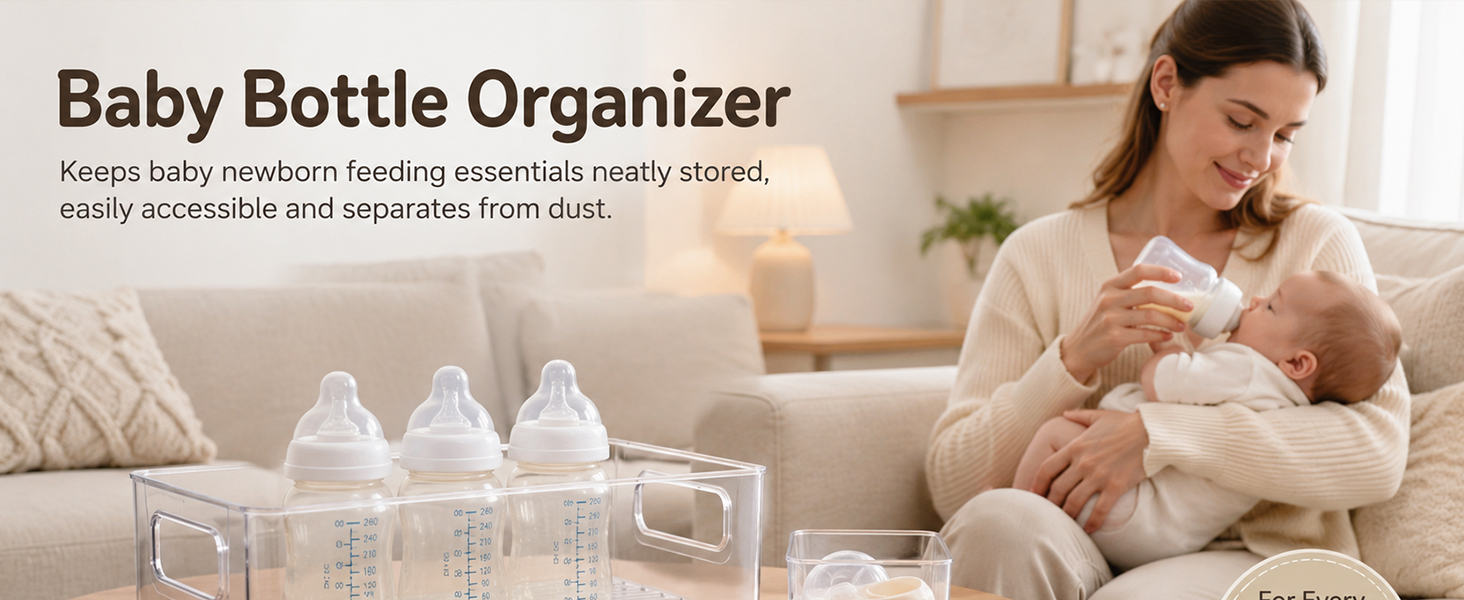
The Ultimate Guide to Baby Bottle Organizers and Smart Baby Bottle Storage
Feeding a baby is one of the most repetitive—and most important—parts of early parenthood. Between midnight feeds, daycare prep, pumping sessions, and washing endless parts, the last thing you want is a kitchen counter crowded with bottles, nipples, caps, and valves. That is where a baby bottle organizer becomes more than a cute nursery accessory. It becomes a practical tool that saves time, reduces stress, and keeps baby products clean, visible, and ready to use.
Whether you are building a registry, organizing a small kitchen, or searching for a better baby bottle storage system, the right setup can make feeding routines noticeably smoother. Below is a practical guide to choosing, using, and maintaining bottle organizers that actually work for real families.
Why a Baby Bottle Organizer Changes Your Daily Routine
A well-designed organizer does more than hold bottles upright. It creates a simple system for the items you reach for most often. When every bottle, nipple, and cap has a place, you spend less time searching and more time feeding, resting, or simply enjoying your baby.
Here are a few everyday benefits of organized bottle storage:
- Faster feeding prep: Clean bottles and matching parts stay together.
- Better drying and airflow: Many organizers double as drying racks.
- Less counter clutter: A compact station keeps baby products contained.
- Easier daycare packing: You can grab a complete bottle setup in seconds.
- Clear inventory: You know which bottles are clean, dirty, or missing.
For parents who pump, a dedicated organizer can also separate breast milk storage bags, adapters, and labels from regular feeding bottles. That small separation helps prevent mix-ups during busy mornings.
Popular Types of Baby Bottle Storage Solutions
There is no single “best” organizer for every family. The right choice depends on your counter space, bottle collection, feeding style, and whether you need portability. These are the most common options:
1. Countertop Bottle Drying Racks
These are ideal for families who wash bottles daily. Look for a rack with pegs for nipples and valves, a removable tray for water, and enough height for taller bottles. A good drying rack keeps parts off the counter and allows air to circulate.
2. Modular Drawer Organizers
If you prefer hidden storage, drawer dividers can keep bottles, caps, and pump parts tidy inside a kitchen cabinet. Clear bins work especially well because you can see exactly what is inside without pulling everything out.
3. Vertical Bottle Trees
Vertical organizers are compact and excellent for small kitchens. They hold bottles upright on a central post and often include space for nipples and rings. This style is practical but works best with a moderate number of bottles.
4. Portable Bottle Bags and Caddies
For daycare, travel, or grandparents’ houses, a portable caddy keeps bottles, formula, and burp cloths together. Insulated bags are useful for outings, while simple caddies work well for moving supplies from room to room.
How to Choose a Baby Bottle Organizer
Before buying any baby products for bottle storage, measure your space and count your daily bottle needs. A large organizer may be unnecessary if you use only a few bottles, while a tiny rack can quickly become frustrating for exclusive pumpers.
- Check bottle sizes: Make sure tall or wide-neck bottles fit without tipping.
- Look for easy cleaning: Removable trays and smooth surfaces are easier to wash.
- Consider airflow: Proper ventilation helps parts dry faster.
- Choose a stable base: It should not slide or tip when wet.
- Plan for growth: A modular system can adapt as your baby’s feeding needs change.
Smart tip: Keep a small “ready-to-feed” station with one clean bottle, a nipple, and a cap. This reduces middle-of-the-night fumbling without requiring a huge storage setup.
Smart Baby Bottle Storage Ideas for Small Spaces
Not every nursery or kitchen has room for a full bottle station. The good news is that smart storage does not require square footage—it requires a little strategy.
Use vertical space. Stackable bins, shelf dividers, and over-the-door pockets can hold lightweight baby products without taking up counter space.
Separate clean and dirty. Use two clearly different bins or label one side of your organizer. This simple habit prevents clean bottles from being mixed with used ones.
Keep daily items at eye level. Bottles, nipples, and formula should be easy to reach. Less-frequent items, such as spare valves or travel caps, can go higher or in a drawer.
Create a washing routine. Organizers work best when they are part of a daily cycle: wash, dry, assemble, and store. A consistent routine keeps the system from becoming another pile of clutter.
Keeping Bottles and Organizers Clean
Baby bottle storage is only helpful if it stays hygienic. Clean your organizer regularly with warm soapy water, especially if it holds wet bottles or catches drips. Allow it to air dry completely before placing clean parts back on it. Avoid leaving standing water in trays, and check corners or peg bases where milk residue can collect.
Bottles, nipples, and valves should be cleaned according to the manufacturer’s instructions. If your organizer sits near a sink or stove, wipe it down more often to prevent grease or splashes from building up.
Final Thoughts on Baby Bottle Organization
The best baby bottle organizer is the one that fits your routine, not the one with the most features. A simple drying rack may be perfect for a minimalist kitchen, while a modular drawer system or portable caddy may suit a busy family on the go. The goal is to make feeding prep faster, keep baby products clean, and reduce daily visual clutter.
Start with one well-placed bottle storage station, label or separate clean and dirty items, and adjust as your baby grows. With a little planning, bottle organization can become one of the easiest parts of your day—exactly what tired parents need.